
By Sachit Subba • Off-Field • Aug 13, 2026 11:15 AM • 372 views
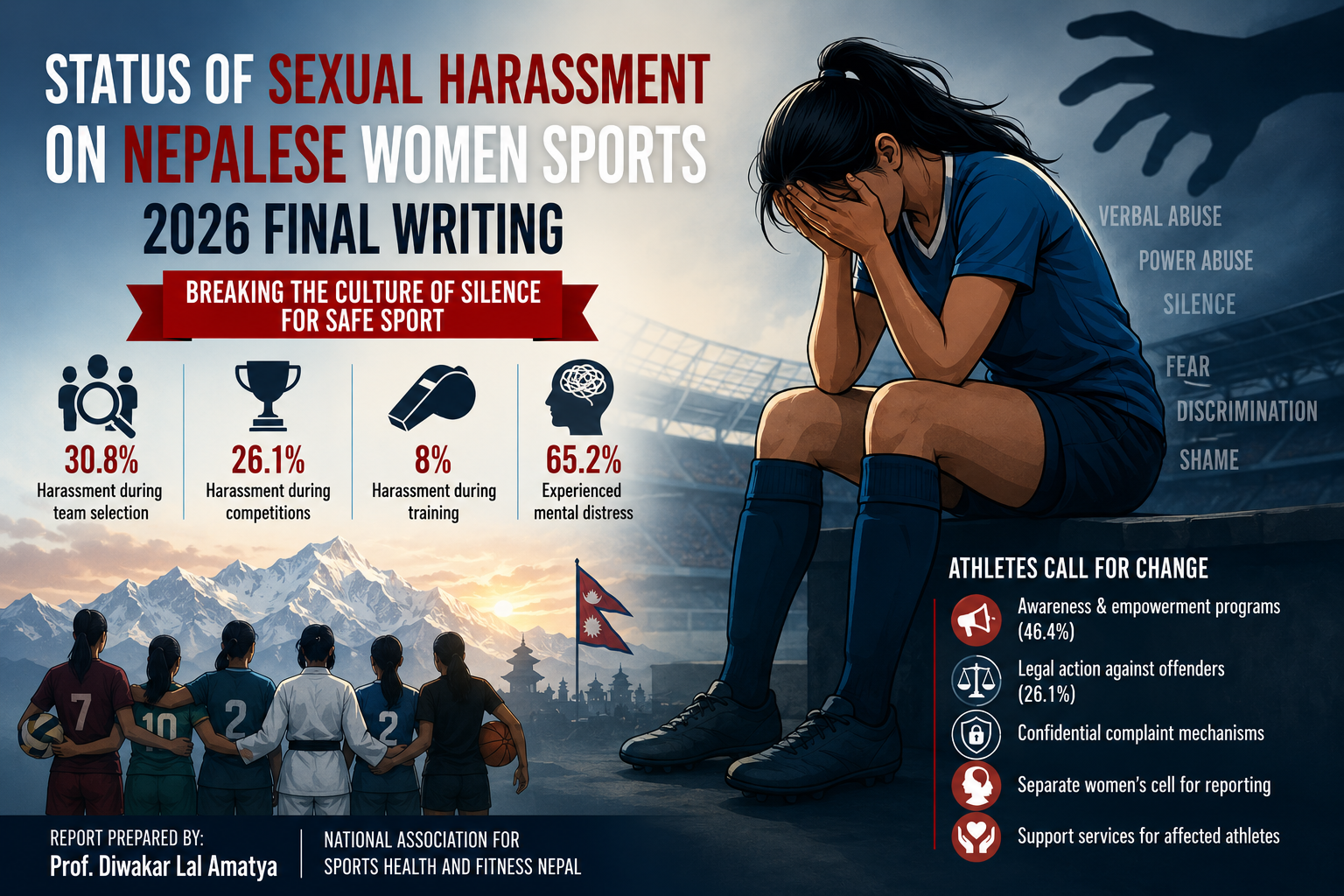
A recent study shows that a pervasive culture of silence is hindering the development of women's sports in Nepal. It surveyed 276 female athletes across 15 disciplines, including karate, kabaddi, football, judo, and rugby.
The report, titled Status of Sexual Harassment on Nepalese Women's Sports, was compiled by Prof. Diwakar Lal Amatya, president of the National Association for Sports Health and Fitness (NASHF) Nepal, in collaboration with sports experts Kumari Hira Pant, Jyoti Giri, and Tribhuvan University lecturer Chandan Koju. The respondents were athletes preparing for the Asian Games, as well as other international, national, and regional competitions.
The data reveal concerning trends. Nearly one-third of athletes (30.8%) reported being targeted during the critical phase of team selection, a period characterised by pronounced power imbalances between athletes and decision-makers. In addition, 26.1% experienced harassment during competitions, and 8% during training. (Oboudi et al., 2026)
Verbal abuse is identified as a central issue. One-third of athletes cited coaches as the primary source of derogatory language during training and competitions, while managers (23.2%) and audiences (11.6%) were also reported. In addition, approximately 20% of athletes attributed responsibility collectively to coaches, managers, associations, and the National Sports Council. (Oboudi et al., 2025)
When questioned directly about sexual harassment, 5.8% of respondents answered affirmatively. However, when analysed by career stage, 30.8% reported harassment specifically related to selection processes. When asked about the perpetrators, 33.3% responded "nobody," which researchers interpret as an indication that many athletes are either unable or unwilling to identify their harassers. In addition, nearly 18% stated they were not willing to disclose details of their experiences. (Palikhe et al., 2024)
The psychological impact is significant: 65.2% of athletes reported experiencing mental distress as a result of harassment. Among those affected, 46.4% described feelings of frustration, 20.3% reported helplessness, and 13% indicated they had considered withdrawing from sports entirely. (Thapalia et al., 2019, pp. 424-430)
Existing reporting mechanisms do not adequately support athletes. While 42% reported confiding in a friend or coach, 26.1% disclosed their experiences to no one, and an additional 24.6% declined to answer. Taken together, these figures suggest that the actual rate of non-reporting may be substantially higher. (Thapalia et al., 2019, pp. 424-430)
Athletes articulated clear recommendations for change. Nearly half (46.4%) advocated for nationwide awareness and empowerment programs, while 26.1% called for legal action against offenders. (Thapalia et al., 2019, pp. 424-430) Respondents also noted the absence of dedicated sports legislation addressing sexual harassment in Nepal. (Sharma et al., 2024) In addition, they suggested strict legal penalties, confidential complaint mechanisms, the establishment of a separate women's cell for reporting abuse, and practical support such as free physiotherapy for affected athletes.
The report contextualises Nepal's findings within a broader global framework, referencing international research from Belgium, Sweden, and other countries that demonstrates harassment prevalence among elite female athletes ranges from 20% to 50%. (Sølvberg et al., 2022) The authors also note that dedicated research on this issue within Nepal has been limited until now.
Amatya and the research team call on the Ministry of Sports, the Nepal Olympic Committee, and national federations to establish binding codes of conduct with explicit measures against sexual harassment. This recommendation aligns with a resolution adopted at the International Olympic Committee's 2000 World Conference on Women and Sport, which urged the implementation of such policies across Olympic organisations globally.