
By Sachit Subba • Football • Jun 15, 2026 10:32 AM • 626 views
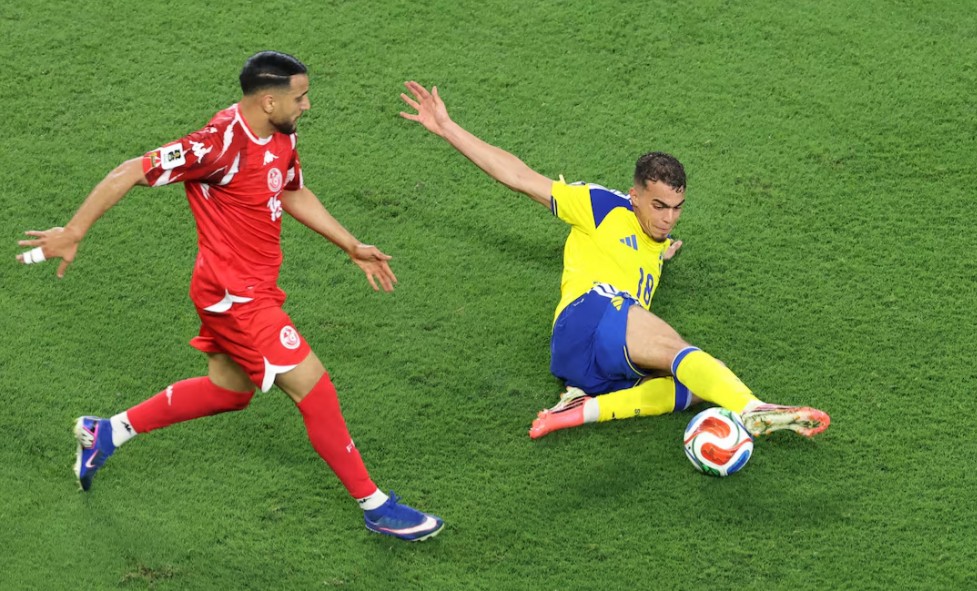
MONTERREY, Mexico — If there were lingering doubts about Sweden’s credentials following a stuttering qualifying campaign, they were emphatically silenced under the humid skies of Monterrey on Sunday. In a display of clinical transition football and individual brilliance, the Blågult dismantled Tunisia 5-1, signalling a tactical rebirth under Graham Potter that few saw coming. The seamless execution on the pitch was a testament to a team that appears transformed since qualifying.
The evening belonged to Yasin Ayari. The Brighton midfielder, born to a Tunisian father, paid homage to his heritage with a brace of breathtaking quality. However, it was the sheer cumulative power of Sweden’s frontline—spearheaded by Alexander Isak and Viktor Gyokeres—that turned a competitive fixture into a rout. Not since the 1938 thrashing of Cuba has a Swedish side been this prolific on the world stage, and the manner of the victory suggests they are no longer merely making up the numbers. Building on this momentum, the match quickly tilted in Sweden’s favour.
The Ayari Ascent
The breakthrough came in the seventh minute from Swedish pressing and Tunisian nerves. Mouhib Chamakh, uneasy from the start, rushed a clearance under Isak’s pressure. Gyokeres’s initial effort was stopped, but Ayari seized the rebound at the edge of the box, launching it into the top corner. Respecting his roots, his celebration was subdued, but Swedish fans in the stands erupted.
Tunisia, traditionally a side built on a pragmatic low block, found itself in an existential crisis. Forced to abandon their counter-attacking blueprint to chase an equaliser, they left the back door unbolted. The shift in strategy exposed vulnerabilities, and at the half-hour mark, Sweden ruthlessly exploited the space.
Starting from their box, Sweden quickly found Gyokeres, who cushioned the ball and released Isakl. The Newcastle striker feinted Montassar Talbi, feinted, and finished past a flat-footed Chamak.
Defensive Lapses and Strike-Partner Synergy
Despite a two-goal deficit, Tunisia allied briefly. Just before halftime, Omar Rekik headed in their first shot on target, hinting at a second-half fightback.g.
The early stages of the second period were characterised by a fascinating, if occasionally disjointed, telepathy between Isak and Gyokeres. On several occasions, the two heavyweights seemed to occupy the same spaces, their individual brilliance momentarily clashing rather than coalescing. However, the evolving partnership hinted at greater cohesion to come.
Elite players adapt. In the 60th minute, the partnership clicked. Isak dispossessed Skhiri and squared for Gyokeres to tap in, making it 3-1. Tunisia was broken.
After the match, coach Graham Potter reflected: "I thought the boys played with a stability and a calmness. Obviously, when you concede, there's always a danger that you get emotional, but the boys did it well. We’ve got two guys up front that can hurt anyone."
The Finishing Flourish
As Tunisia’s defence collapsed—a painful turn for a team unbreached in qualifying—Sweden pressed their advantage. Substitute Svanberg scored in the 84th minute, confirmed after a VAR check for offside.
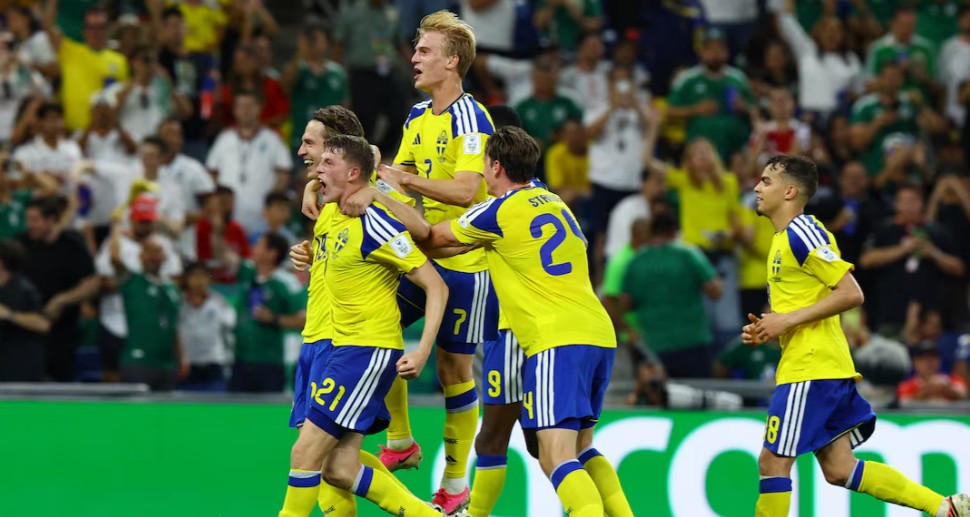
Ayari sealed it in stoppage time, firing a replica of his earlier goal. This time he exploded in celebration, underlining Sweden’s rise to Group F leader.s.
Following the defeat, Tunisia coach Sabri Lamouchi admitted, "We are shooting ourselves in the foot. Starting the competition with this bad of a loss is indeed difficult."
For Sweden, the "Potter Project" has its signature moment at the World Cup. If Isak and Gyokeres refine their partnership, Sweden could topple the "German Wall" this summer.